Why are they so beautiful if no one ever sees them?
That’s a question I often ask myself after encounters with especially elegant and cryptic marine creatures.
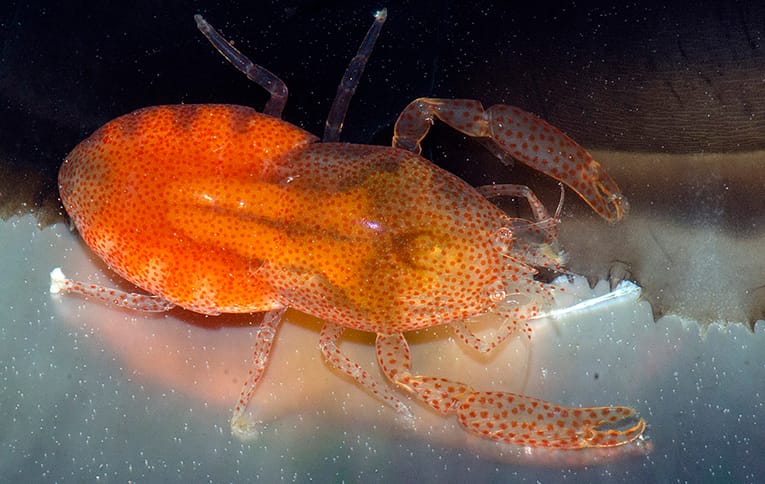
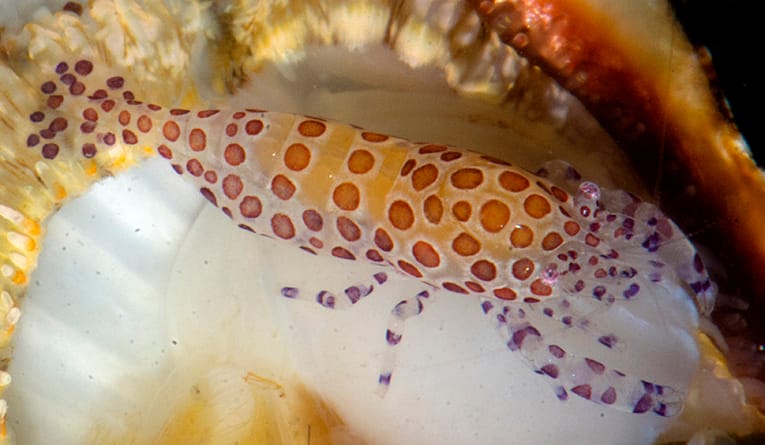
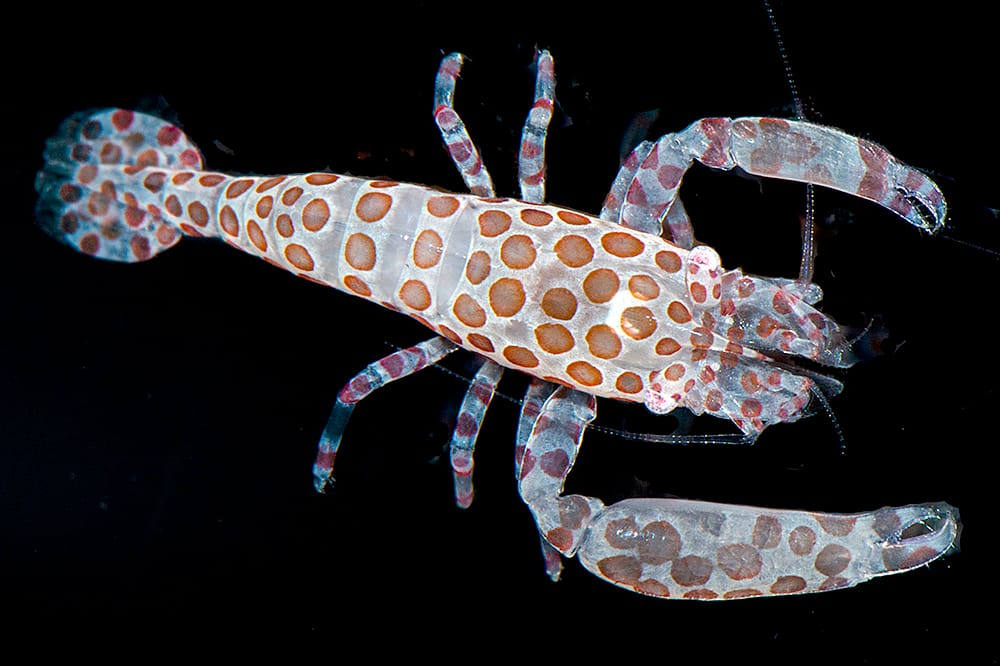
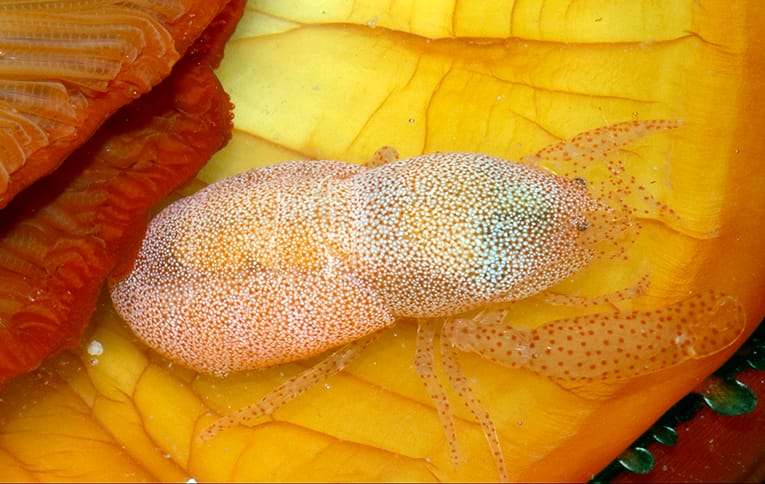
Few animals fit this question better than bivalve-associated shrimps.
They are strikingly beautiful — and at the same time almost impossible to observe for divers or underwater photographers.
Their entire lives are spent hidden inside the shells of bivalve mollusks such as clams, oysters, and mussels.
Most individuals live as pairs, one male and one female.
The contrast is curious — the male is small, pale, and barely noticeable, while the female is larger and often richly patterned.
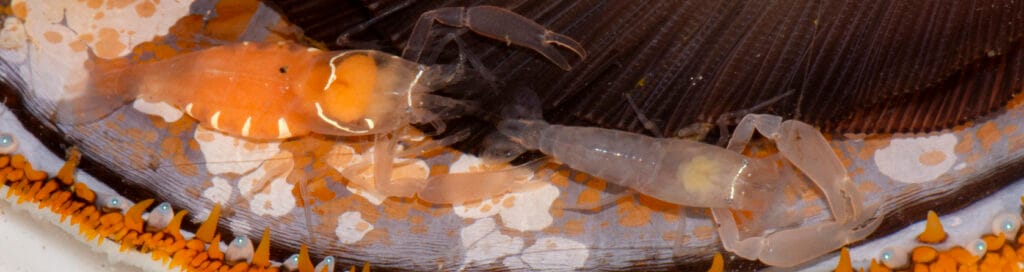
What makes this even more remarkable is that all available information suggests these shrimps form socially monogamous pairs. A male and a female share the same host and remain together for life.
So they don’t just eat the same food every day.
They share the same partner.
The same shell.
The same very limited, enclosed space.
For life.
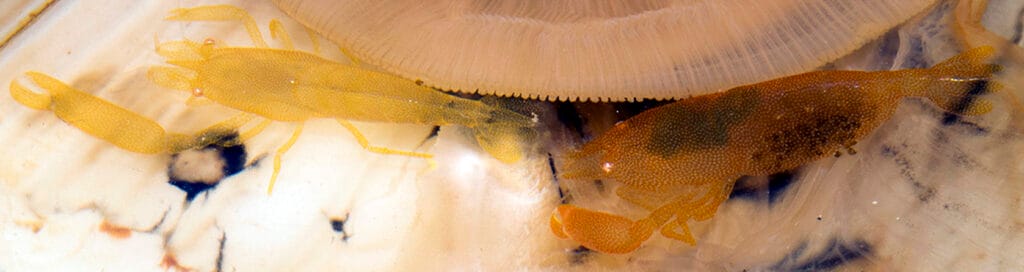
These shrimps live as endosymbionts, sharing the inner cavity of their host — a sheltered space the mollusk uses for feeding and respiration. The hard shell provides protection from predators and environmental stress. A voluntary confinement in exchange for safety.
Their feeding strategy is just as unusual. Instead of hunting, they rely on what their host brings in:
- mucus and food particles filtered from the surrounding water,
- organic waste produced by the mollusk,
- and sometimes parasites or dead tissue, acting as small in-house cleaners.
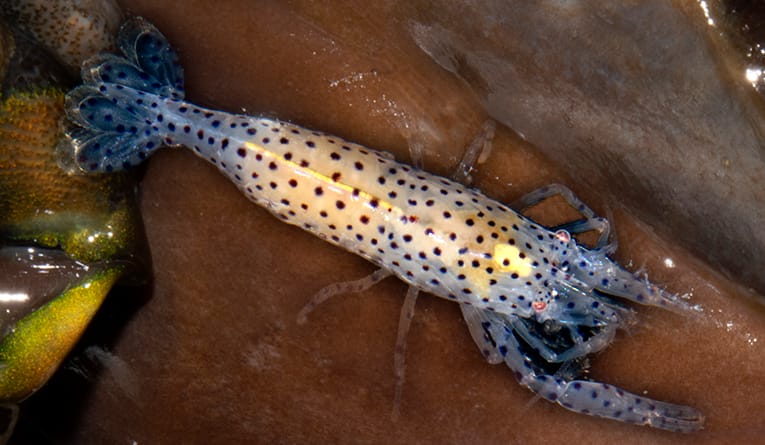
Not a glamorous diet — but clearly an effective one.
All photographs shown here were taken by me during marine biological expeditions, while assisting scientists studying mollusks and crustaceans. These shrimps are rarely seen, rarely photographed, and easily overlooked — yet they remind me that some of the ocean’s most refined beauty exists completely out of sight.
All photos and text Andrey Ryanskiy
More information Coral Reef Crustaceans book
You are welcome to repost these materials with proper credit to the author and a link to the original article