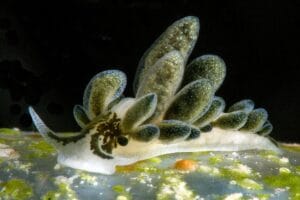
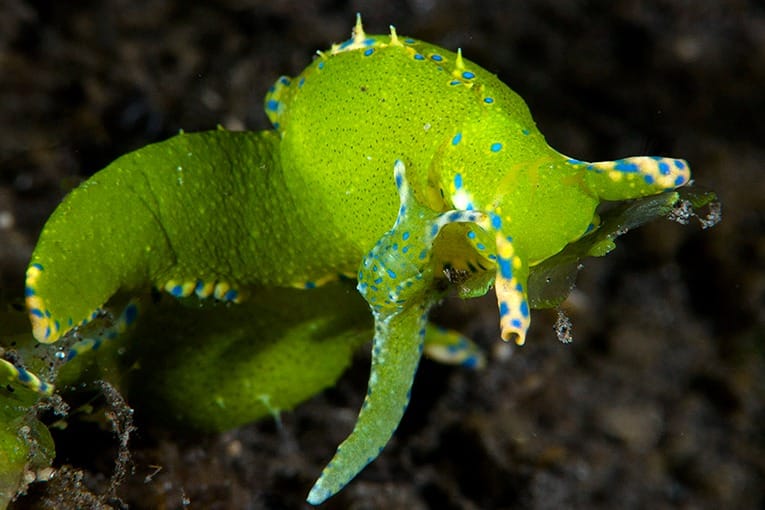
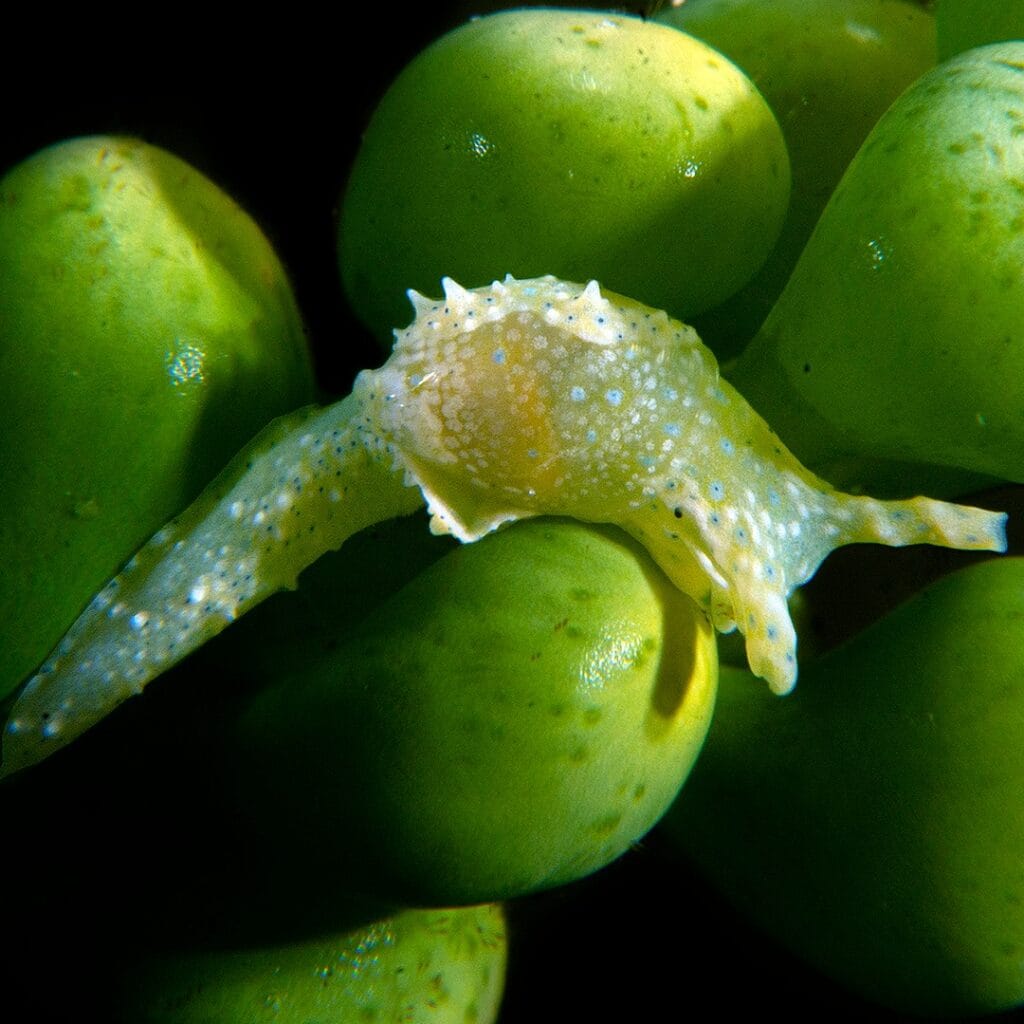
Among the many unusual sea slugs of the Indo-Pacific, species of the genus Oxynoe are some of the most perfectly adapted to life among green algae. Their shape, texture, and coloration blend almost seamlessly into the algae they inhabit, making them extremely difficult to spot underwater.
These small sacoglossan sea slugs feed by piercing algae cells and sucking out their contents. Unlike nudibranchs, Oxynoe species still retain a tiny internal shell hidden inside the body — a reminder of their evolutionary relationship to shelled mollusks.
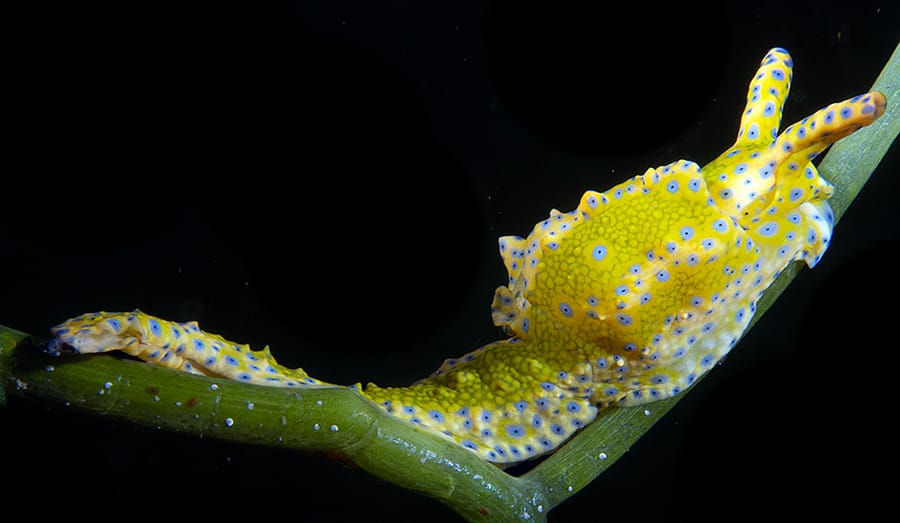
Solar-Powered Sea Slugs
Oxynoe belong to a fascinating group of sea slugs known as sacoglossans, sometimes called “solar-powered sea slugs.” After feeding on algae, they temporarily store functional chloroplasts inside their own tissues in a process known as kleptoplasty. These stolen chloroplasts can continue photosynthesis for some time inside the slug’s body.
This unusual adaptation is one of the reasons sacoglossans attract significant interest from marine biologists and underwater photographers alike.
Oxynoe vs Lobiger
The Indo-Pacific region is home to several species of Oxynoe, along with a few closely related species of Lobiger. Although similar, the two genera can often be distinguished by body shape.
Lobiger species usually have larger wing-like parapodia and a heavier, broader appearance, while Oxynoe species tend to look slimmer, more delicate, and more streamlined among algae branches.
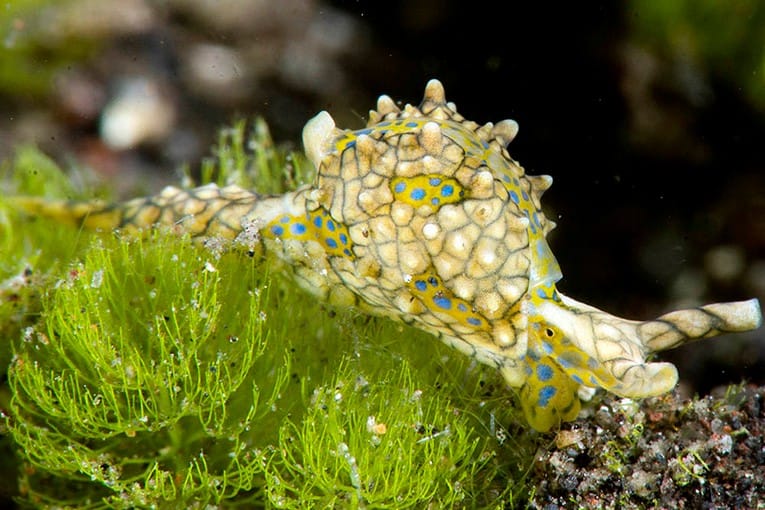
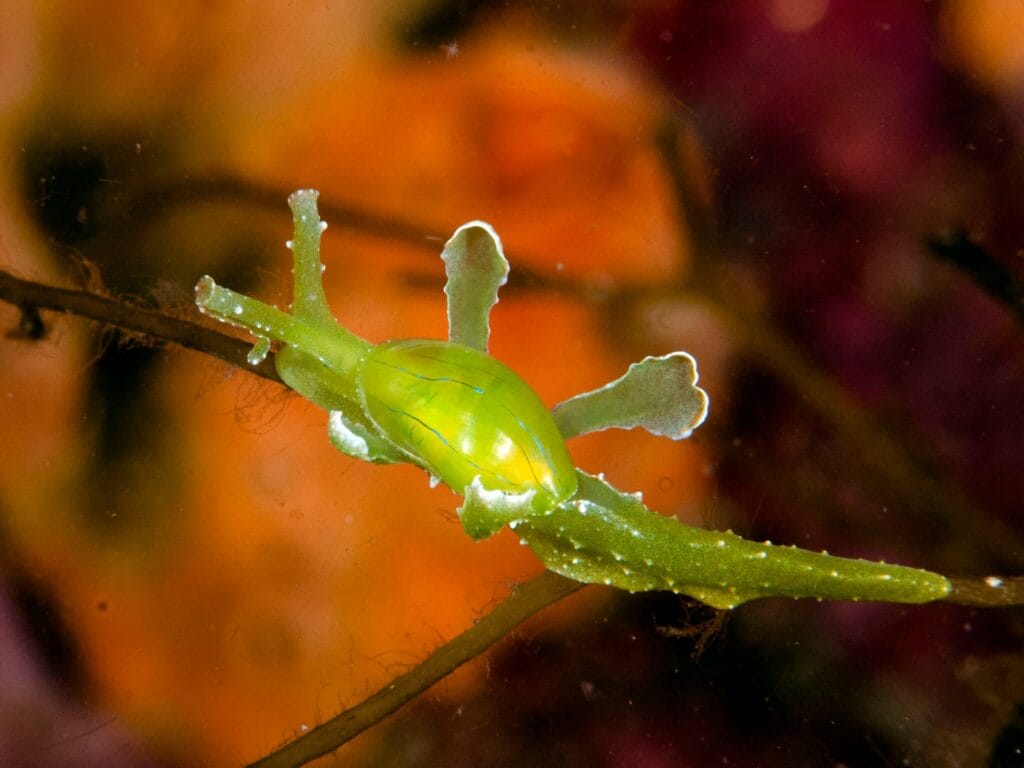
Unpredictable Appearance on the Reef
One of the most interesting aspects of Oxynoe behavior is how unpredictable their presence can be. A small patch of algae may contain dozens of individuals one day and appear completely empty the next.
They are often associated with tidal cycles and may become more visible during high tide, while at other times remaining hidden deep near the base or roots of the algae where they are difficult to detect.
Responsible Underwater Photography
For underwater photographers, Oxynoe are highly attractive subjects due to their unusual appearance and camouflage. However, photographing them on their natural algae is important both ethically and visually.
Removing sea slugs from their habitat for “clean background” images not only disrupts their natural behavior but also removes an essential part of the story — their remarkable relationship with algae and the camouflage strategies that help them survive.
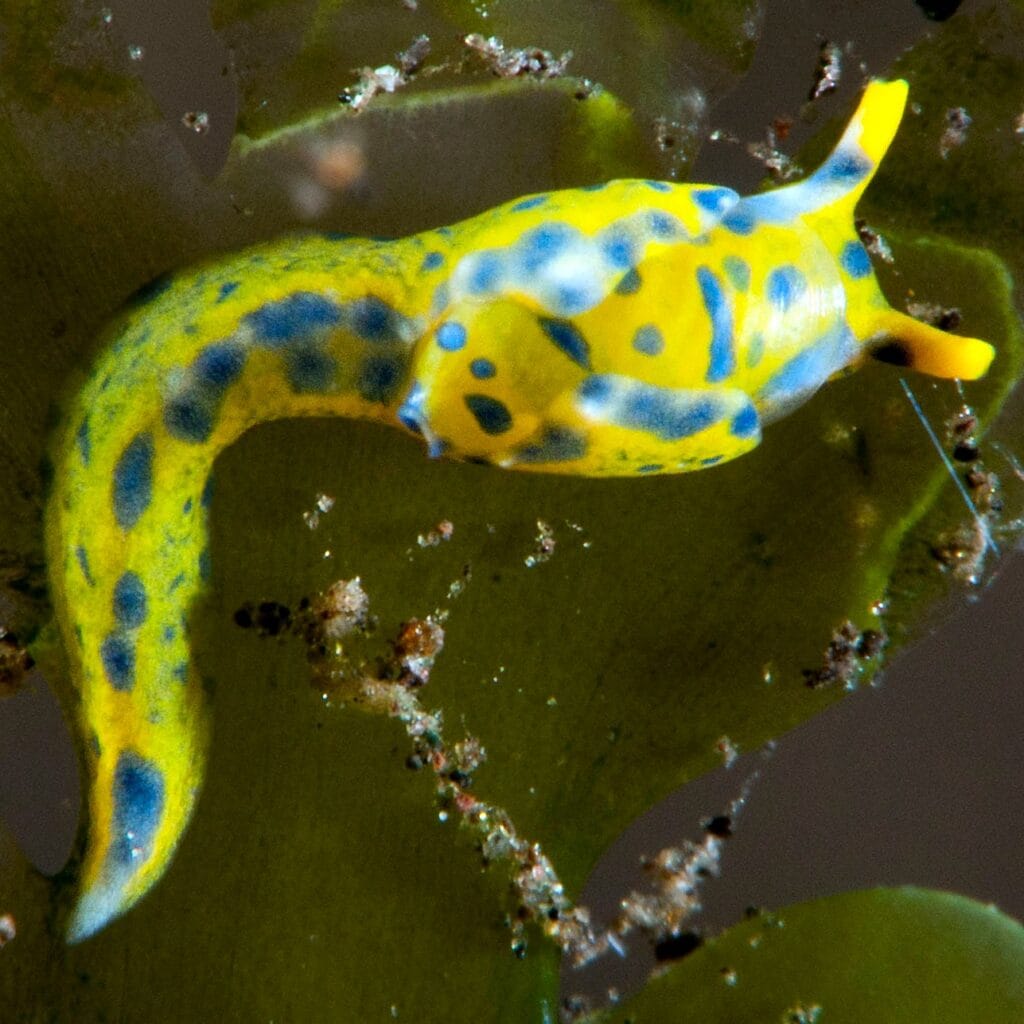
Nudibranchs and Related Sea Slugs of the Coral Triangle
More photographs and identification information about Oxynoe, sacoglossans, nudibranchs, and related sea slugs can be found in the book Nudibranchs of the Coral Triangle — currently one of the few identification guides covering the region with fully updated modern taxonomy for nudibranchs and related sea slugs.