A friend of mine recently dived in Tulamben. A dedicated boat dive — specifically in search of Rhinopias. On the neighboring boat there was a large group of divers from Southeast Asia. After the dive, a guide mentioned something that stuck with me: none of the divers from that group knew what a Rhinopias Scorpionfish was.
Looks like the gap becomes more visible: photo technique is improving fast – but understanding of marine life is not always keeping pace. This post is a small attempt to reduce that imbalance.
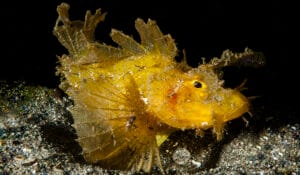
Rhinopias are a genus of rare charismatic scorpionfish considered the “Holy Grail” of marine life for underwater photographers and divers due to their bizarre, alien-like appearance and mastery of camouflage.
Key Unique Characteristics
- Extravagant Camouflage: Unlike typical scorpionfish, Rhinopias are often adorned with elaborate, weed-like appendages, skin tags, and filaments. They mimic their surroundings so perfectly—resembling algae, crinoids, or coral—that they are nearly impossible to spot unless they move.
- Sedentary “Walking” Behavior: They rarely swim. Instead, they use their pectoral and pelvic fins to “walk” or “hop” slowly across the seabed. To enhance their disguise, they often rock back and forth to mimic debris or vegetation swaying in the current.
- Skin Shedding (The Cuticle): They are the only fish known to regularly shed their entire outer skin layer (the cuticle). Because they remain stationary for so long, this process helps them rid themselves of algae and parasites that accumulate on their bodies.
- Gape-Strike Predation: As ambush predators, they wait motionless until prey is within range. They then lunge forward and open their enormous mouths so quickly it creates a vacuum, sucking the victim in whole.
- Vibrant and Varied Hues: Despite their need to hide, they come in a stunning array of psychedelic colors, including brilliant pinks, reds, yellows, and purples. Some individuals can even change their color over several weeks to match a mate or new environment.
There are currently six recognized species, but three are most frequently sought after by divers in the Indo-Pacific:
Rhinopias aphanes — Lacy Rhinopias
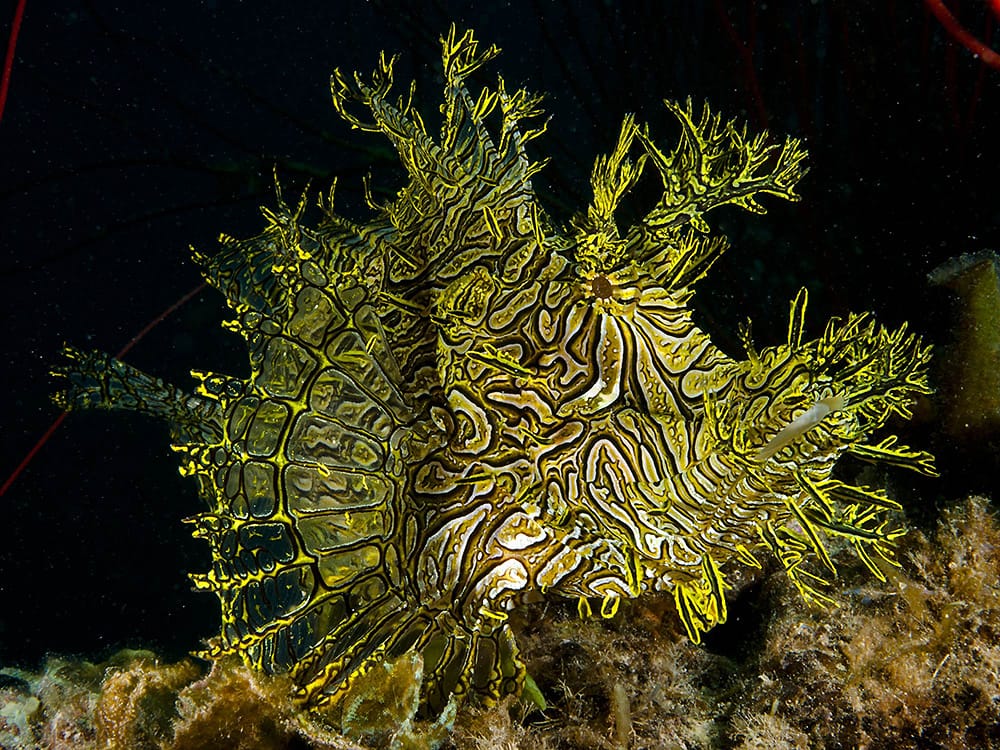
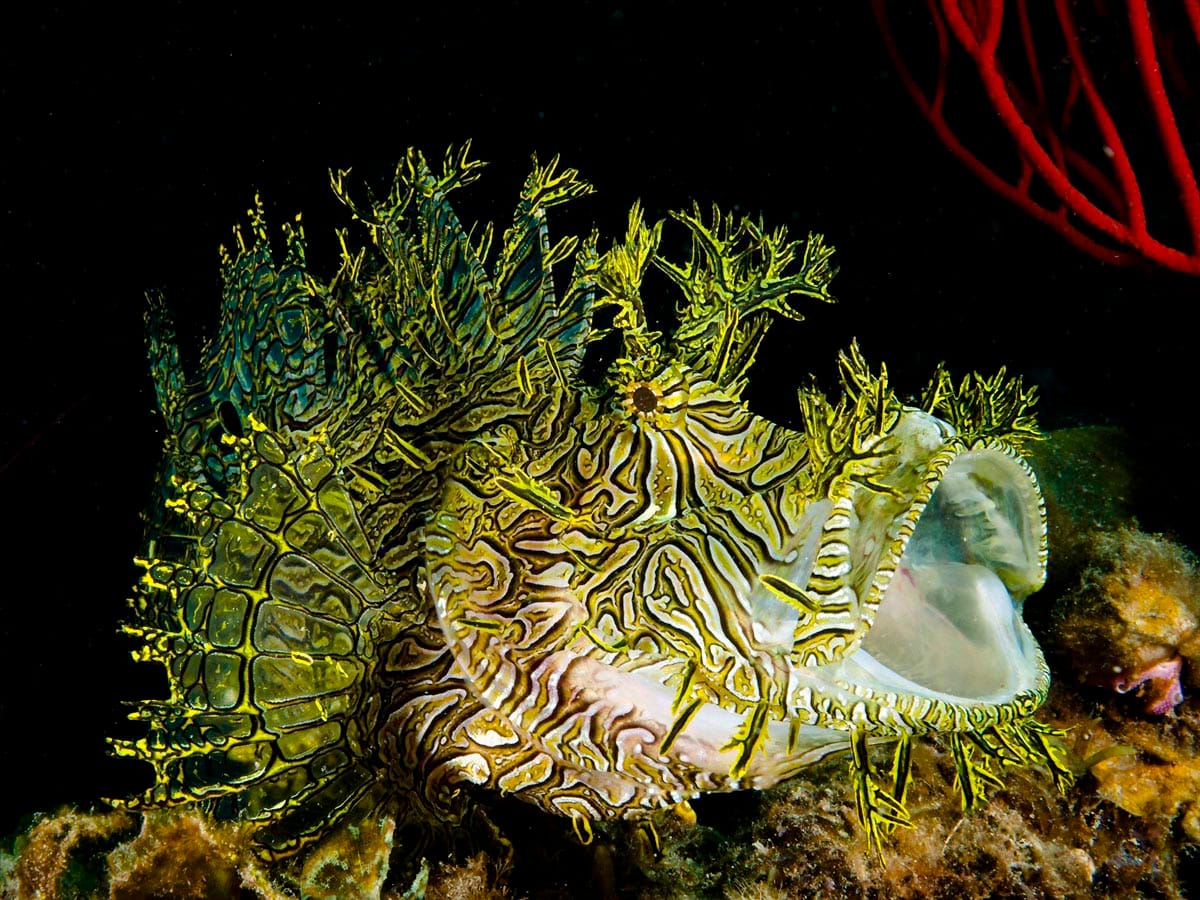
Often considered the most beautiful — not only the rarest. Long dermal appendages. Complex reticular pattern of dark lines on yellow or greenish background. Bright white spot under eye. Lacy Rhinopias are frequently found near crinoids, where their form, texture, and posture allow them to mimic feather stars.
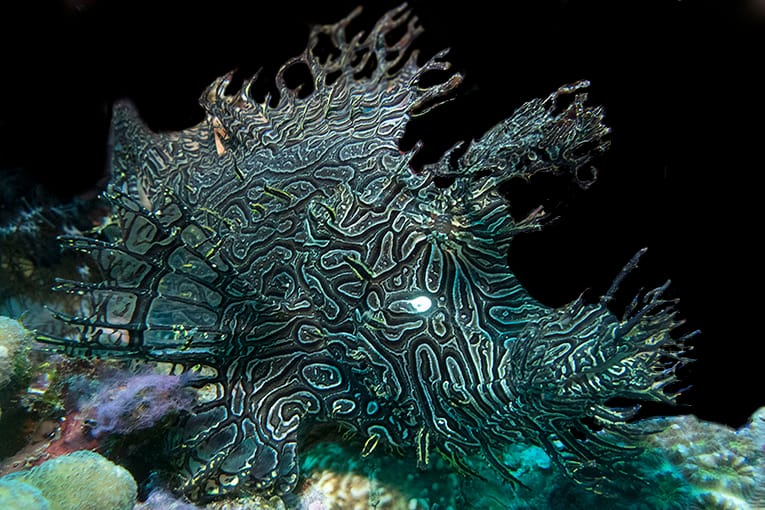
Rhinopias frondosa — Weedy Rhinopias
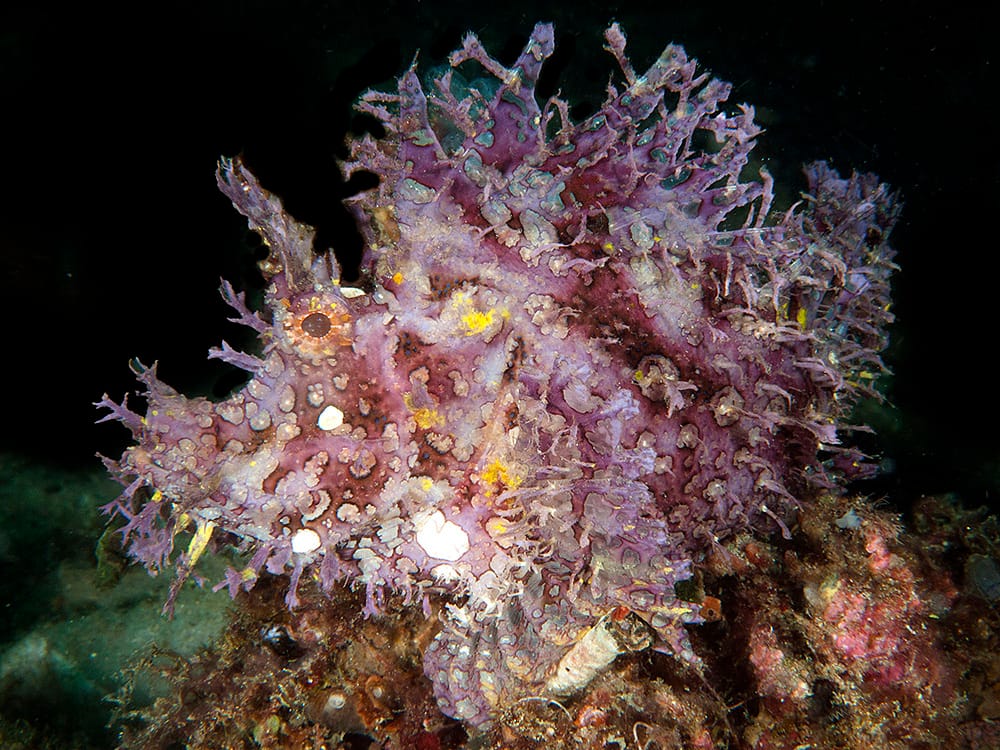
Covered in branched, weed-like filaments with circular “water droplet” patterns on the body, Weedy Rhinopias resembles drifting algae or detached reef growth rather than a specific organism.
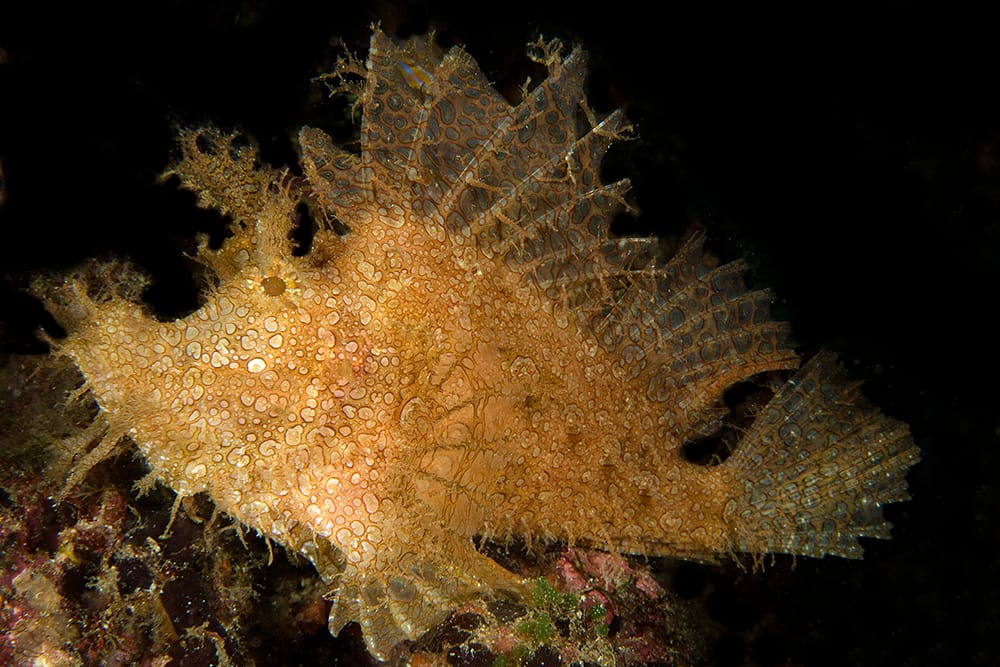
Rhinopias eschmeyeri — Eschmeyer’s Rhinopias
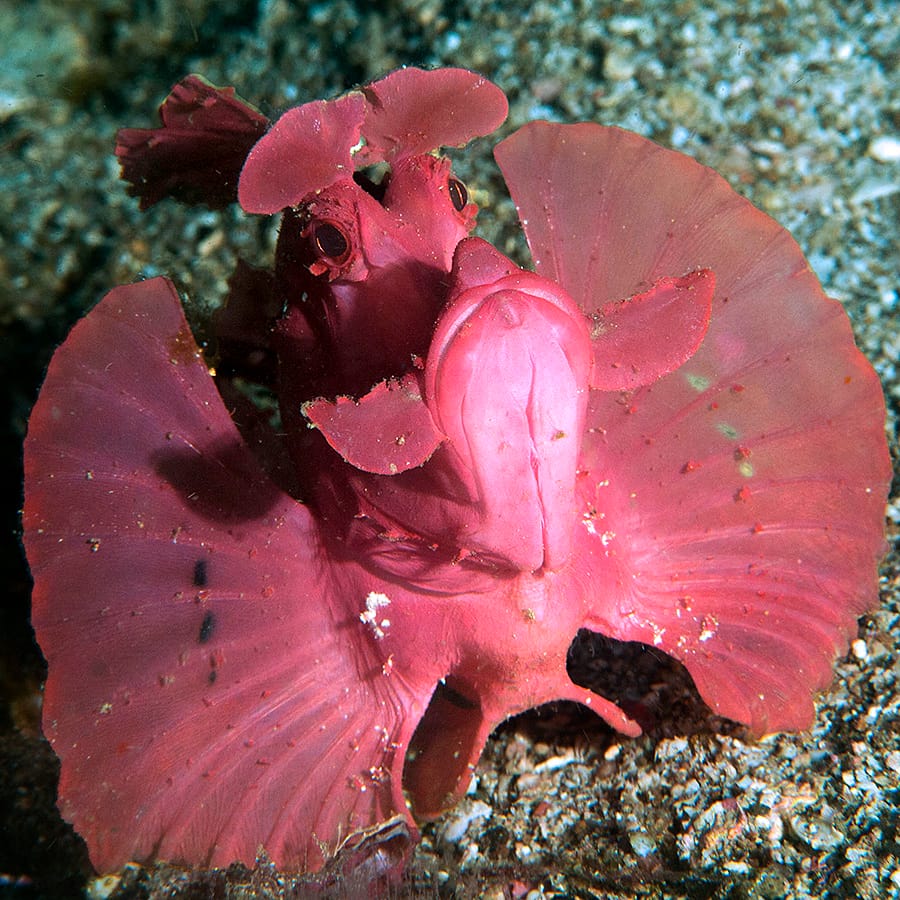
Features distinctive, flattened skin flaps above the eyes (like “eyebrows”.) Smoother skin, fewer appendages, variable colors, two tentacles on the underside of the lower jaw.
There are other species in this genus that are poorly known even to ichthyologists, not to mention divers and underwater photographers.
Tips for Underwater Photographers
The wider, the better
Don’t try to turn a Rhinopias into a classic macro subject. A 105 mm lens is rarely the right tool here and often works against the fish. Fisheye performs far better, and 20–35 mm is a near-perfect choice if you have it — it keeps texture, shape, and habitat together.
Get as close as possible — then control the background
Move in until you’re closer than feels comfortable. Once close, angle your strobes sharply. This limits light on the background, helps darken it naturally, and keeps the focus where it belongs — on the fish.
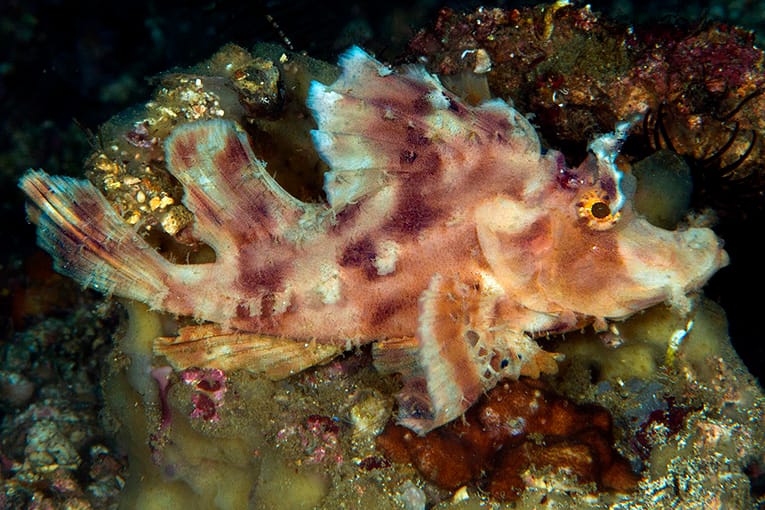
Where to Find Rhinopias Scorpionfishes
Rhinopias scorpionfishes are Indo-Pacific species, but their distribution varies significantly between species.
Rhinopias aphanes — Lacy Scorpionfish
This species has the most limited distribution. Reliable encounters are from Papua New Guinea and New Caledonia.
Rhinopias eschmeyeri — Paddle-Flap Scorpionfish and
Rhinopias frondosa — Weedy Scorpionfish
These two species have the largest range in the genus, extending through much of the Indian Ocean, Indonesia, Australia, and north to the Philippines and Japan.
Reliable places for encounters include:
- Anilao
- Ambon
- Alor
- Lembeh Strait
- Sumbawa
- Bali — in particular Padang Bai and Tulamben
All photos Andrey Ryanskiy
Recommended fish book Reef Fishes of the Coral Triangle