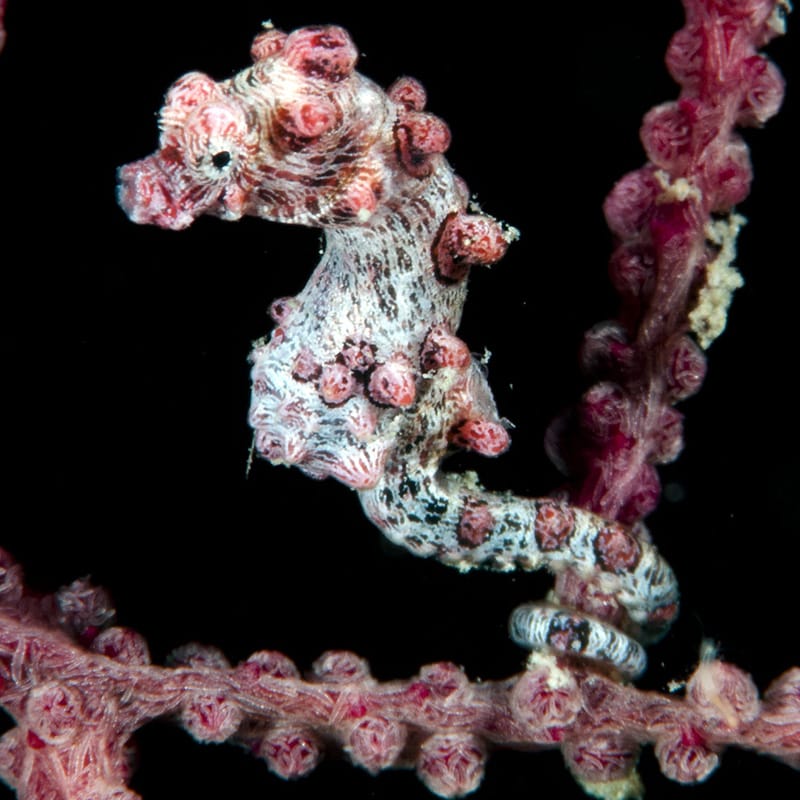
I’ve seen Bargibant’s pygmy seahorse many times — the red ones, and the rarer orange or yellow forms. And every time, they struck me as oddly child-like. Not in a sentimental way — more like something about them felt unfinished, as if they never fully “grew into” their final shape.
You may have noticed the same.
As it turns out, there is a solid biological reason for that.
This is where genetics enters the picture.
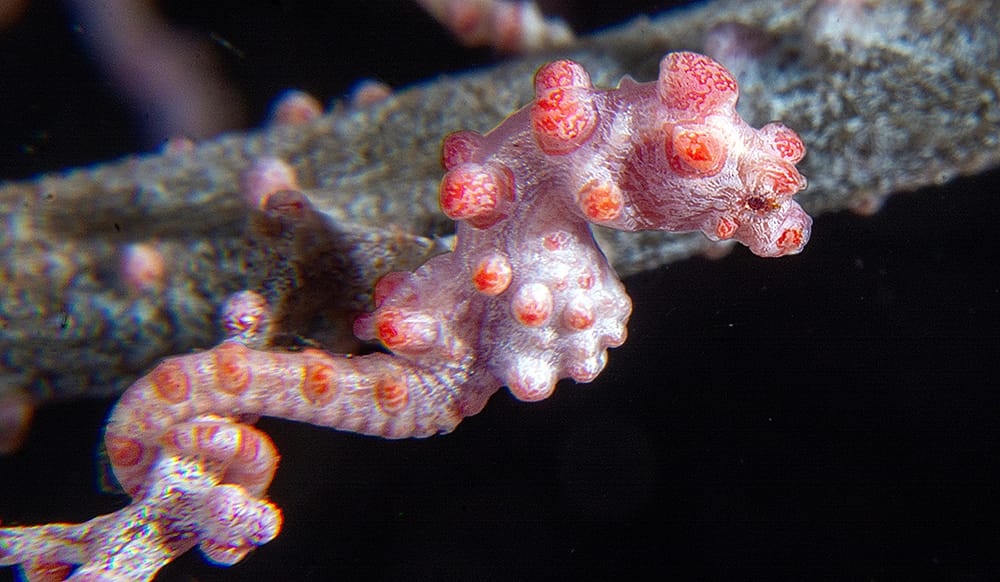
Recent genomic research has shown that Hippocampus bargibanti lacks several key developmental genes that, in other seahorse species, drive normal facial growth. One of them is hoxa2b, a gene involved in elongating the snout during development. Without it, the snout never lengthens.
Biologically speaking, this is a case of neoteny — the retention of juvenile traits into adulthood. The pygmy seahorse does not pass through the usual later stages of facial development. Its early form simply becomes the final one.
But facial proportions are only part of the story.
Another crucial element of its disguise lies in the surface of the body itself. The rounded, polyp-like tubercles covering the pygmy seahorse are not random decorations. Research suggests that these structures originate from early developmental features that, in most seahorses, are later remodelled or lost as the animal matures. In Hippocampus bargibanti, those features persist.
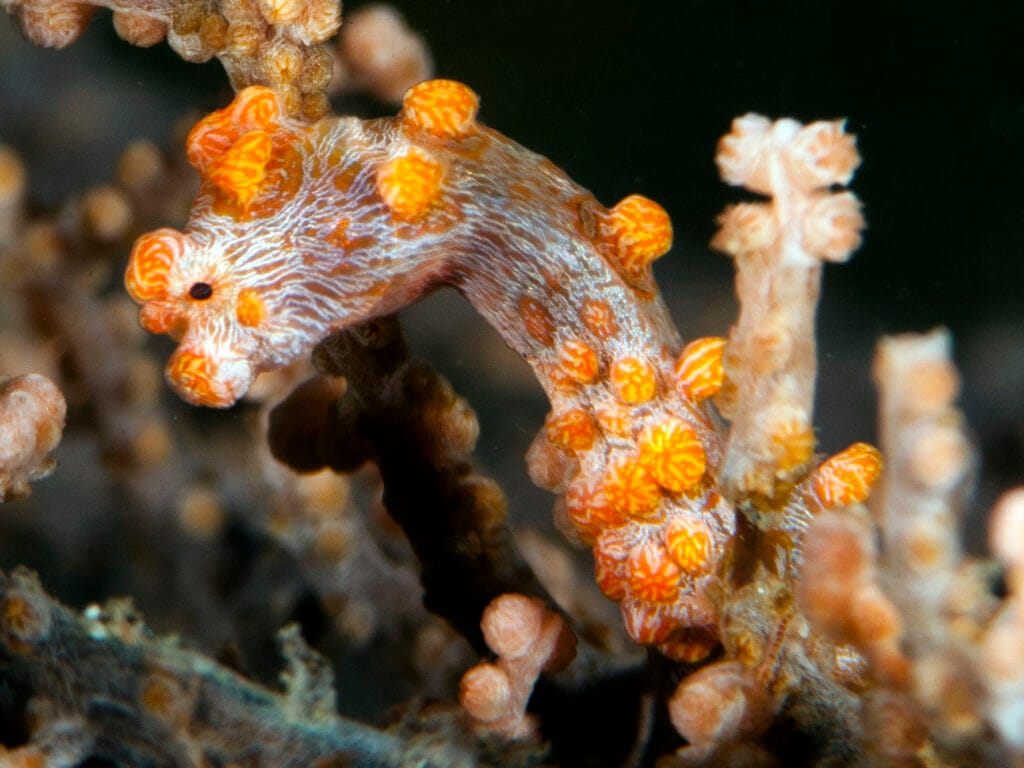
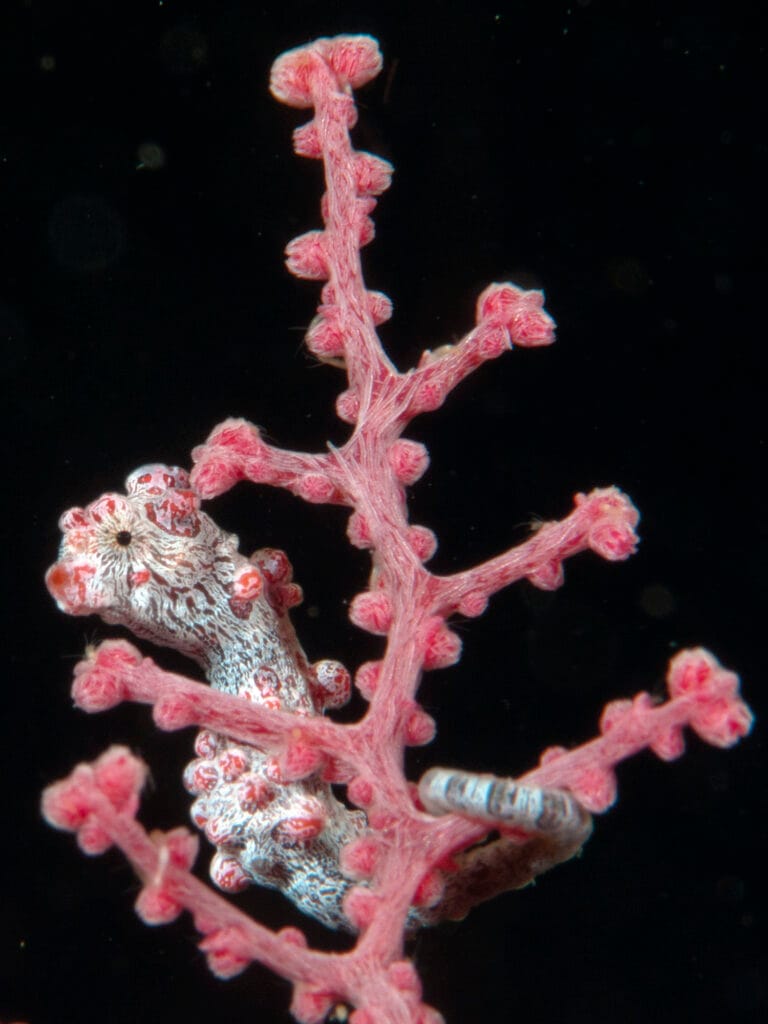
The result is remarkably precise mimicry. These retained structures closely match the size, spacing, and texture of the polyps of the gorgonian corals the seahorse lives on. Camouflage here is not only about colour or general shape — it operates at the level of surface relief.
Taken together, the shortened snout, compact head, and polyp-like skin structures allow the animal to blend into its host coral so completely that it becomes difficult to separate fish from coral at a glance.
What may look like eternal juvenility is not a flaw or an accident.
It is a highly specific outcome of altered development — one that turns an early developmental state into an efficient and highly specialised survival strategy.
All photos and text Andrey Ryanskiy
More information Reef Fishes of the Coral Triangle book
You are welcome to repost these materials with proper credit to the author and a link to the original article