Cave Corals in the Coral Triangle
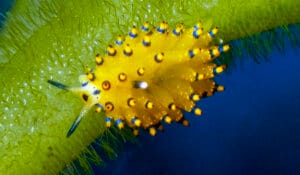
Most underwater photography tends to focus on well-known subjects such as nudibranchs. However, marine life offers a much wider range of forms worth documenting — from fish and tunicates to corals and other less obvious reef organisms.
One of the most interesting environments for this kind of observation is underwater caves. These habitats often host species that are rarely noticed during standard reef dives and can display unusual shapes and structures.
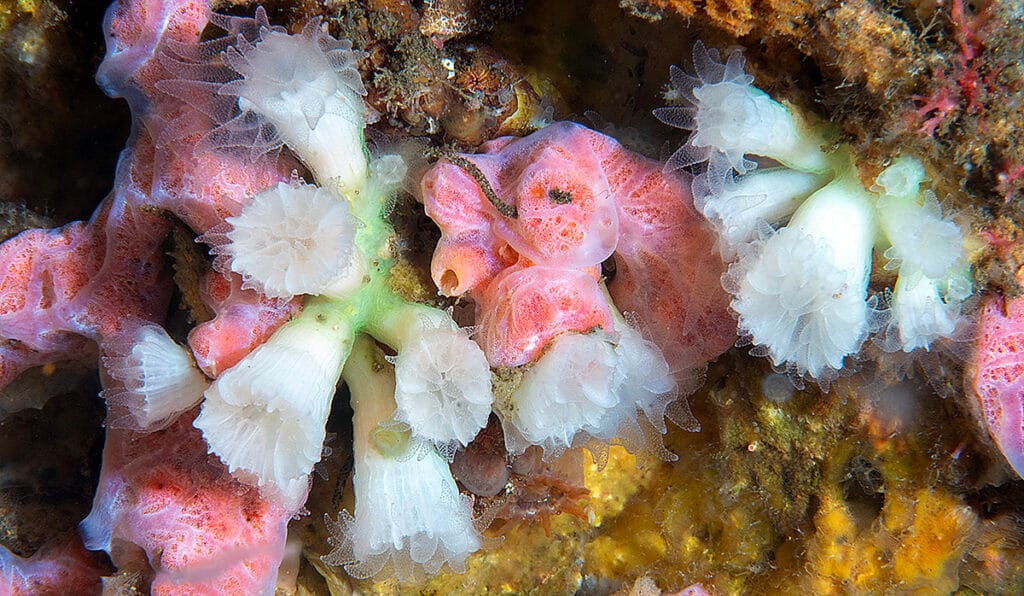
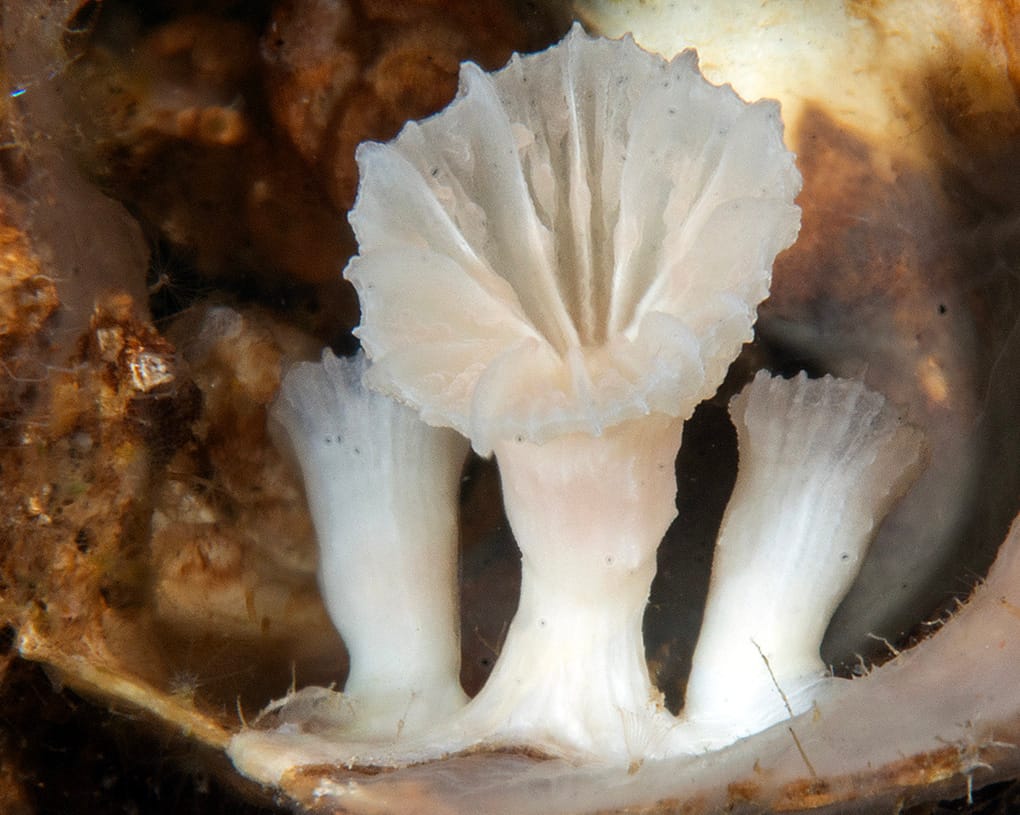
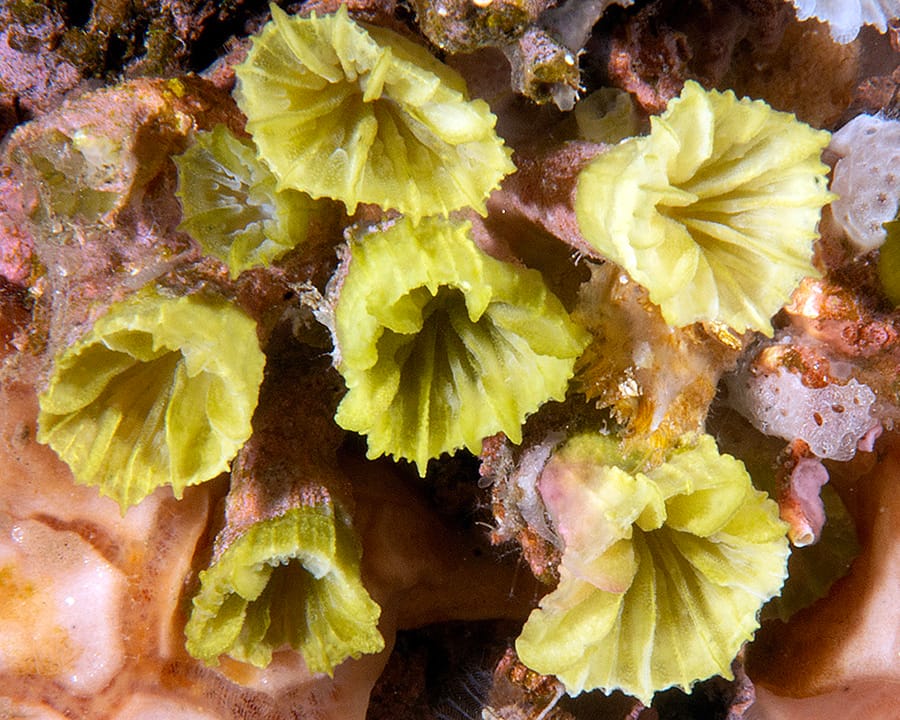
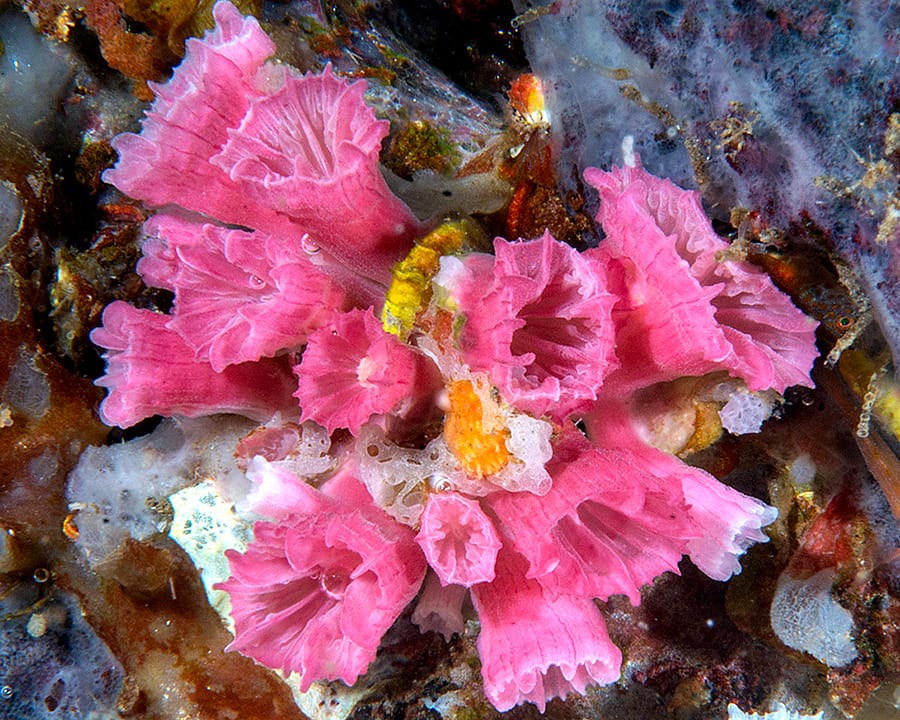
During dives in Bali, several cave systems revealed corals with a distinctive, almost artificial appearance. Their rigid skeletons resembled small flowers or gramophone horns, making it difficult to immediately recognize them as stony corals.
What Is Thalamophyllia tenuescens?
These corals were later identified as Thalamophyllia tenuescens — a species typically found in low-light environments such as caves and overhangs.
Unlike many reef-building corals, they are not immediately visible in daylight conditions. Their structure becomes more apparent when viewed closely, especially in environments where competition for light is limited.
Night Diving and Polyp Behavior
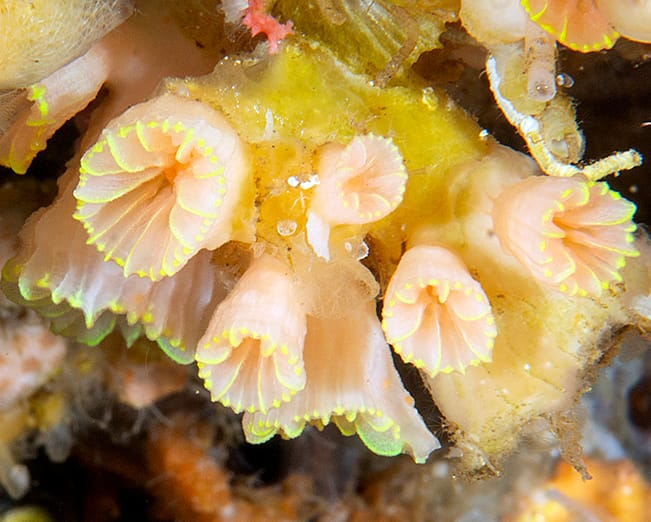
Like many corals, Thalamophyllia tenuescens extends its polyps at night to feed on plankton. This makes night dives the most effective time to observe their full form.
Photographing them in this state is technically challenging. The polyps are extremely sensitive and retract almost instantly when exposed to light, requiring a careful approach and controlled lighting conditions.
For underwater photographers, this often means working with minimal light intensity and maintaining distance to avoid disturbing the subject.
Color Variation and Possible Causes
Another notable feature is their color variation. While often assumed to be white, individuals can also appear in pink or yellow shades.
One possible explanation is the influence of microorganisms associated with their calcium skeleton. While not fully understood, this interaction may affect pigmentation and contribute to the observed variation.
Where to Look During Night Dives
For divers exploring the Coral Triangle, cave ceilings and overhangs are worth closer attention, especially during night dives.
These areas are often overlooked, but they can host a range of less conspicuous species. Even familiar dive sites may reveal unexpected details when examined more carefully.
Identification and Reference Materials
For those interested in identifying less obvious reef species, Life on the Reef: Corals, Sea Squirts, Sponges, Bryozoa, Comb Jellies, Marine Plants can serve as a practical reference guide for underwater observations.