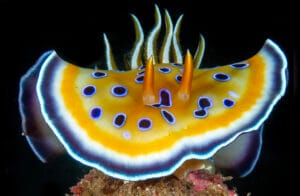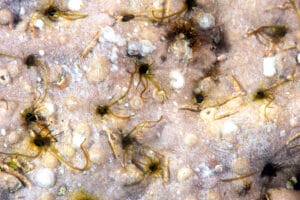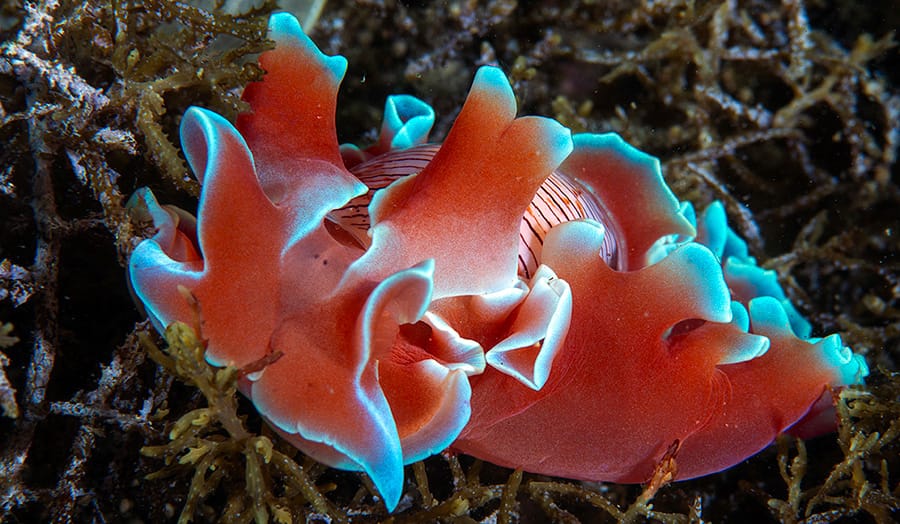
From March 28 to April 4, the first Dahab Sea Slugs Census took place in the Red Sea. Divers and nudibranch enthusiasts from several countries joined the project. They spent a week diving, searching for sea slugs, photographing them, and building a shared species list. The concept was simple, but the results were stronger than expected.
The Team of Event
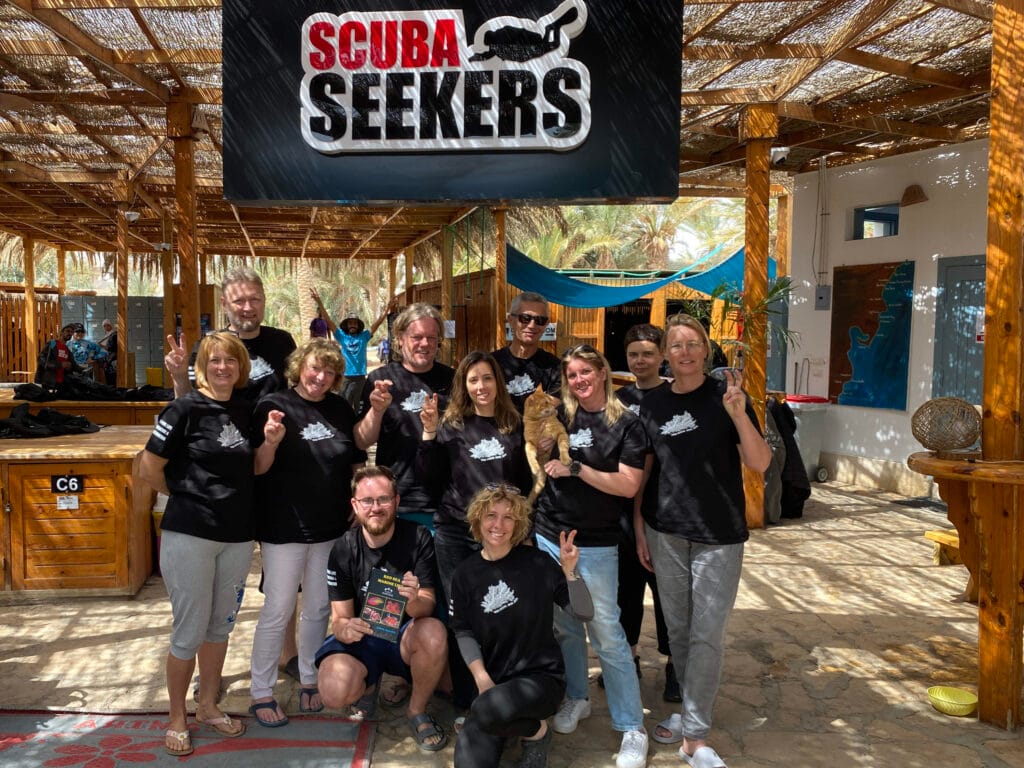
The 2026 census brought together 10 participants from the UK, the Netherlands, Denmark, and Ukraine. The group completed 16 shore dives, including 7 night dives, and explored 6 dive sites. Night dives focused on two sites within Dahab. Weather conditions limited access to more exposed locations, so the team chose protected areas along the coast. Scuba Seekers organized all dives and handled logistics, which made the process smooth and efficient.
The Results of Dahab Sea Slug Census 2026
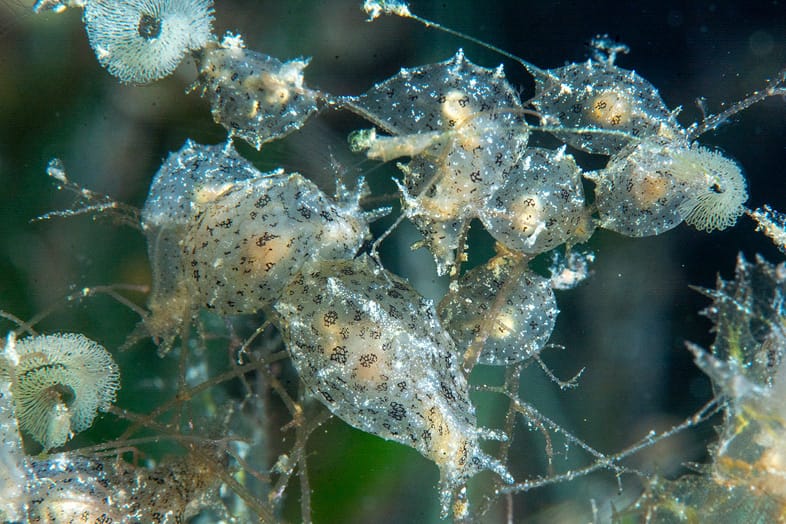
Even within these limits, the outcome was impressive. The team recorded 71 species of nudibranchs and sea slugs. This result highlights how rich Dahab sea slugs communities can be under the right conditions. Timing played a key role. In late March, Dahab Bay experiences a seasonal algae bloom. Large amounts of drifting algae collect in shallow seagrass areas and create a temporary but highly productive habitat. In some places, sea slug density reached dozens of individuals per square meter. Entire algae patches were full of movement.

Three species clearly dominated in numbers. The sea hare Notarchus indicus appeared in massive quantities. It covered algae, formed mating aggregations, laid eggs, and often swam above the vegetation in groups. The second most common species, Melibe engeli, reached up to 12 cm in length, which is significantly larger than typical records. The third species, Petalifera ramosa, also appeared in large numbers. During a single dive, divers could see hundreds of individuals. These species do not feed on algae directly. Instead, they rely on detritus or small organisms linked to the bloom, which shows how indirect ecological connections shape this system.
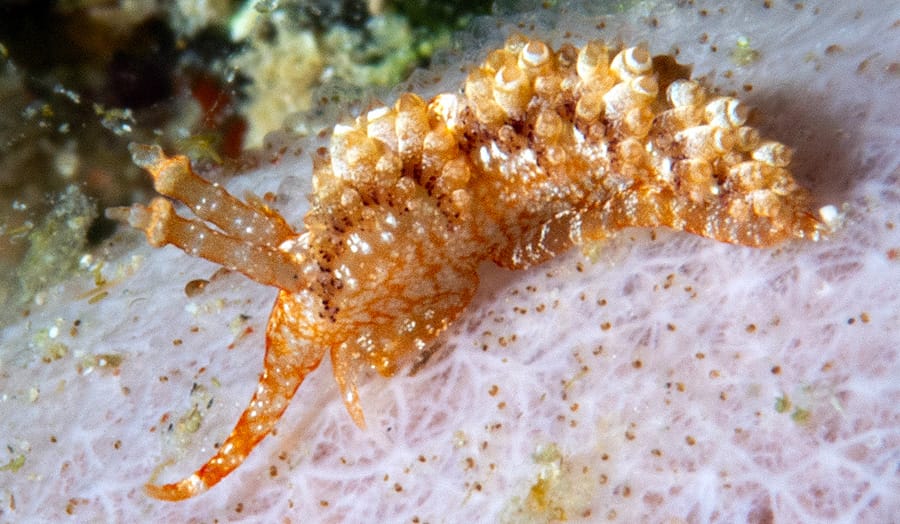
Other nudibranchs also appeared regularly in seagrass habitats. Martadoris limaciformis and Plocamopherus ceylonicus fed on bryozoans. Baeolidia moebii fed on small anemones. Species from the genus Carminodoris fed on sponges. All of them stayed close to algae-rich areas where their food sources concentrate.
The Most Rare Finds
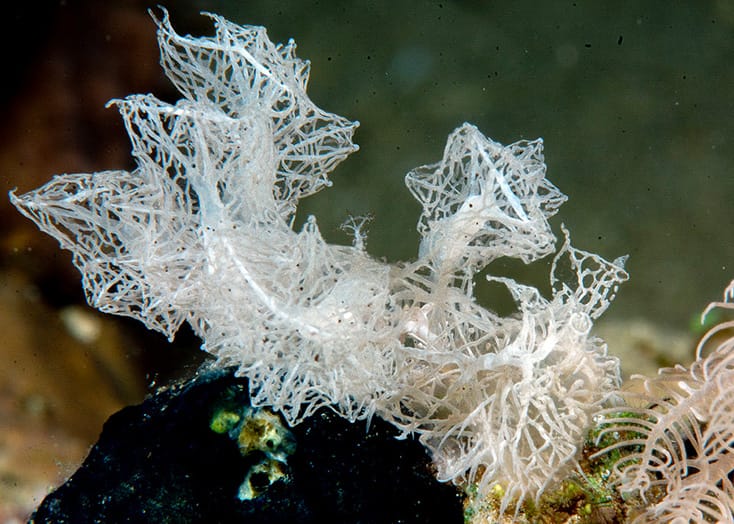
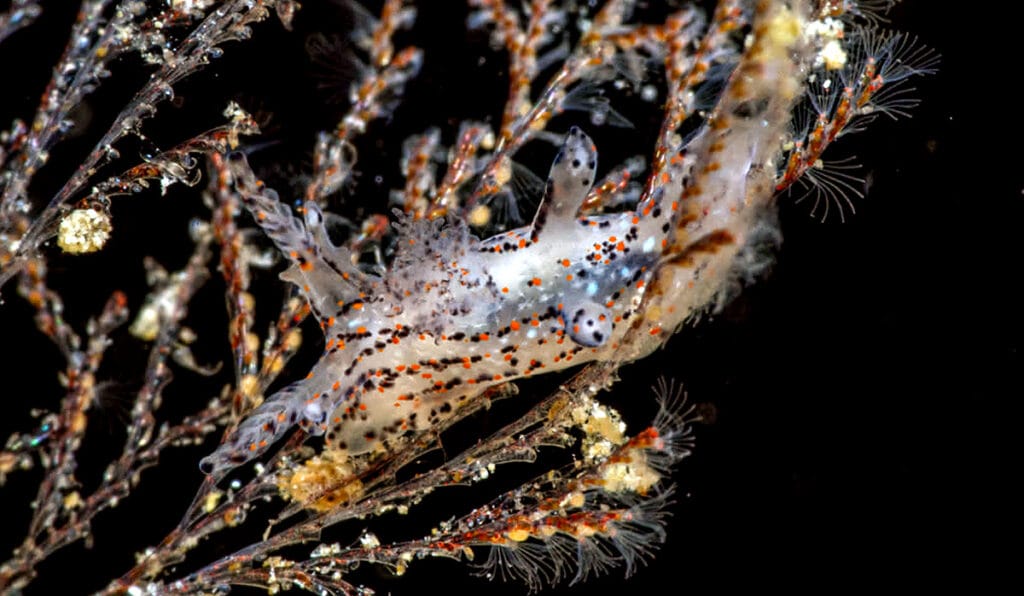
Several findings stood out. The Phantom Nudibranch, Melibe colemani, appeared again at two dive sites, both north and south of Dahab. Polycera melanosticta, a species rare in the Red Sea, was found on its bryozoan host. A representative of the genus Phidiana may be the first recorded observation of this group in the Red Sea. Dermatobranchus albus was observed directly on its food source, the soft coral Briareum hamrum, with green polyps clearly visible. These findings further confirm the diversity of Dahab sea slugs beyond the most common species.
Who was behind it
Andrey Ryanskiy and Irina Khlopunova organized the census. They live in Sharm El Sheikh and dive in Dahab regularly. Over time, they built strong knowledge of local marine life. Interest from nudibranch enthusiasts pushed them to create this event. A year earlier, they had already documented Melibe colemani in Dahab, a species mostly known from Southeast Asia.
Compared to similar sea slug census events in Australia or Indonesia, the diversity recorded here is competitive. Locations such as Tulamben usually show higher total species counts. They offer more habitats, more dive sites, unrestricted night diving, and access to professional macro spotters. In Dahab, about three quarters of all species came from just two neighboring sites — Lighthouse and Mashraba. This makes Dahab sea slugs diversity even more remarkable given the limited conditions.
The exact causes of the annually recurring algae bloom in the Sinai region remain poorly understood. While its impact on sea slugs populations is clearly significant, the phenomenon itself has not yet been sufficiently studied and represents an interesting direction for future research.
Next Sea Slug Census
The next Dahab Sea Slug Census is scheduled for March 28 to April 3, 2027. Participation is open to marine biologists, underwater photographers, and divers interested in nudibranchs and sea slugs.
Dahab Sea Slug Census 2026 Check-List
Sources and references include published works on Red Sea molluscs and nudibranch identification, as well as field observations.
Blatterer H, 1015, Mollusca from the Dahab region (Gulf of Aqaba, Red Sea) 481 pp.
Gosliner TM, Valdés Á, Behrens DW, 2018. Nudibranch & sea slug identification. Indo-Pacific. 2nd ed. 452 pp.
Ryanskiy A. (2023) Red Sea Marine Life. Amazon KDP, 300 pp.
Schuhmacher H. Notes on occurrence, feeding and swimming behaviour of Notarchus indicus and Melibe bucephala at Elat, Red Sea
(Mollusca: Opisthobranchia) Israel Journal of Zoology, 2013
Yonow N. (2008) Red Sea Sea Slugs. Pensoft Publications, Sofia, 304 pp.
https://www.inaturalist.org/projects/dahab-sea-slug-census-2026
https://www.inaturalist.org/projects/melbourne-sea-slug-census-xxiv-april-2025
https://www.inaturalist.org/projects/tulamben-and-amed-sea-slug-census-2025