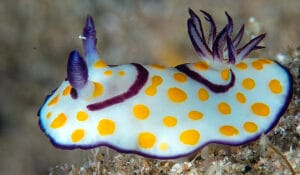
Underwater Macro Is More Than Nudibranchs
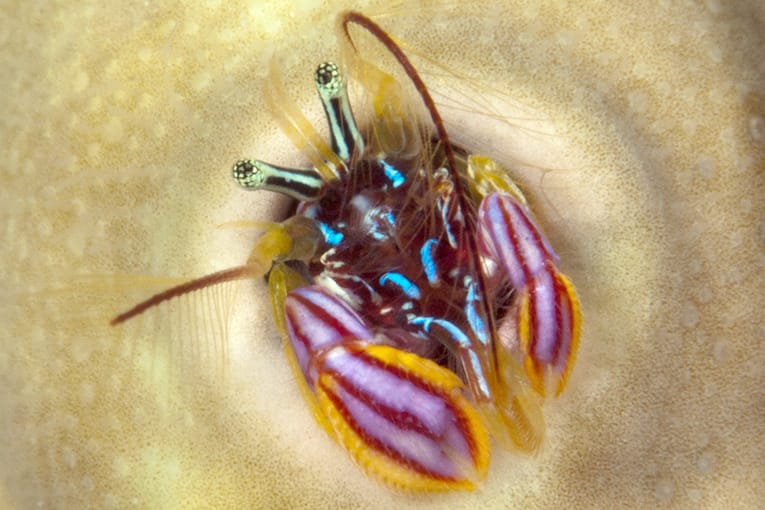
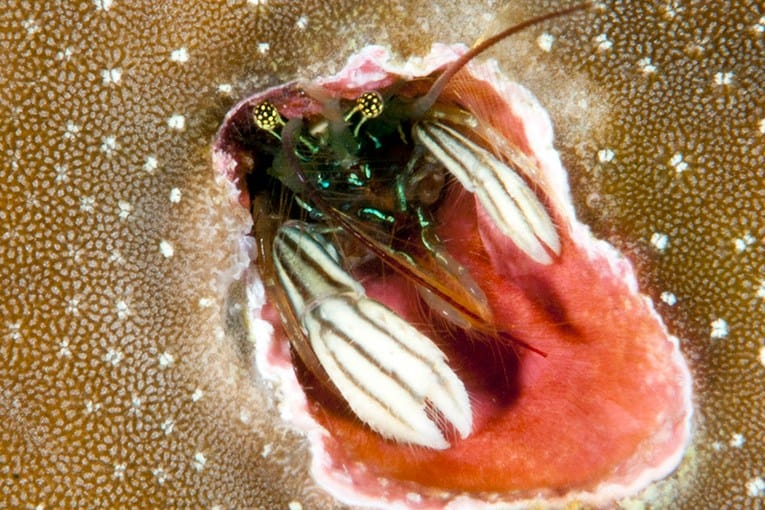
The Paguritta hermit crab is one of the most overlooked subjects in underwater macro photography. While divers often focus on nudibranchs, this tiny coral-dwelling crustacean reveals an entirely different side of reef life.
But underwater macro photography goes far beyond nudibranchs. Coral reefs host an extraordinary diversity of small invertebrates that are rarely highlighted during guided dives — not because they lack interest, but because finding them requires patience, trained eyes, and curiosity.
One of the most fascinating — and often overlooked — groups are reef crustaceans.
Today’s spotlight: hermit crabs of the genus Paguritta.
What Makes the Paguritta Hermit Crab Different?
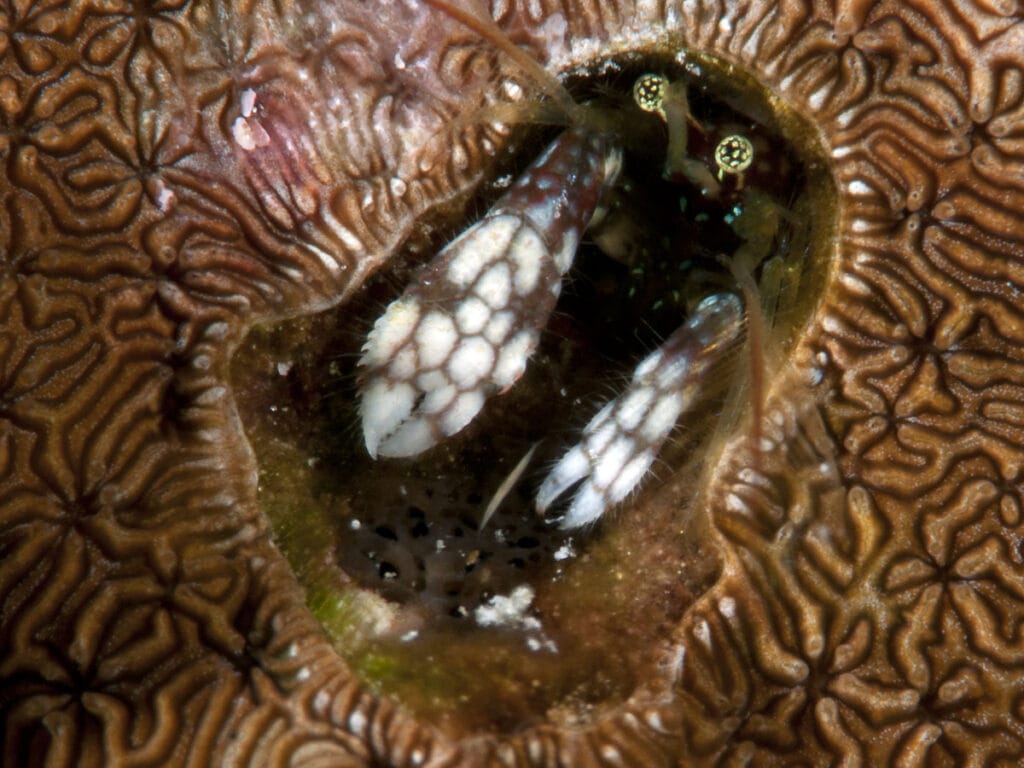
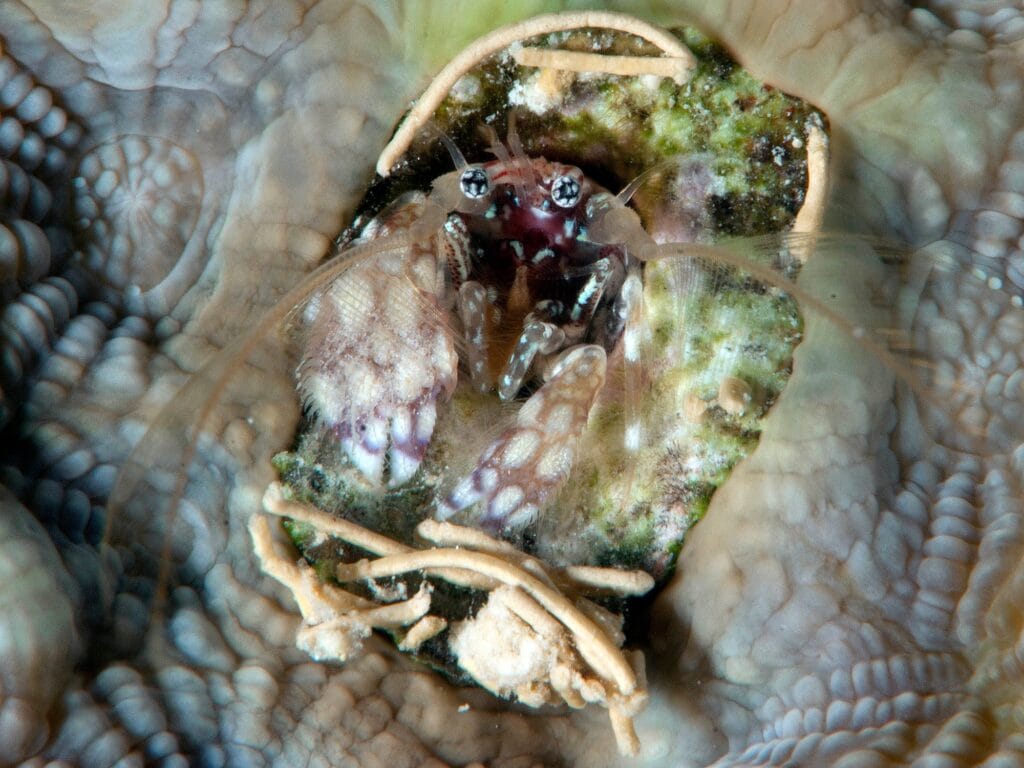
Unlike the classic wandering hermit crabs that occupy empty snail shells, Paguritta species have a very different lifestyle.
They live inside worm tubes embedded within hard corals. These tubes provide permanent shelter inside the coral skeleton — essentially secure micro-apartments within the reef structure.
Instead of roaming across the substrate, they remain partially hidden, venturing only slightly out of their tube openings.
This lifestyle makes them:
- extremely small
- shy and sensitive to movement
- easy to overlook
Yet once noticed, they reveal surprisingly complex behavior.
Behavior Worth Watching
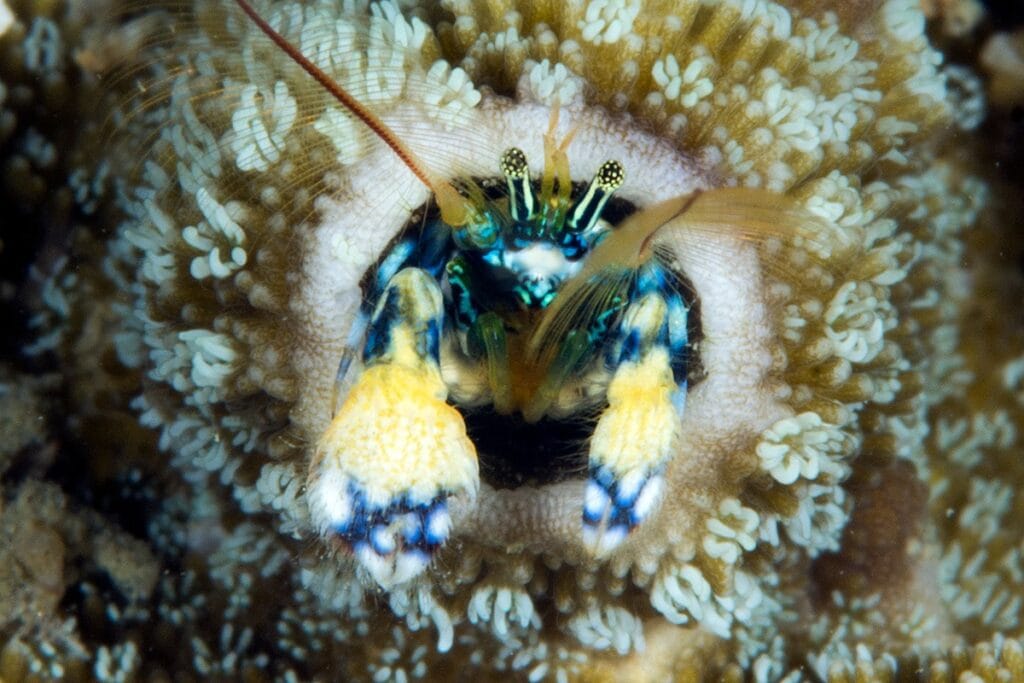
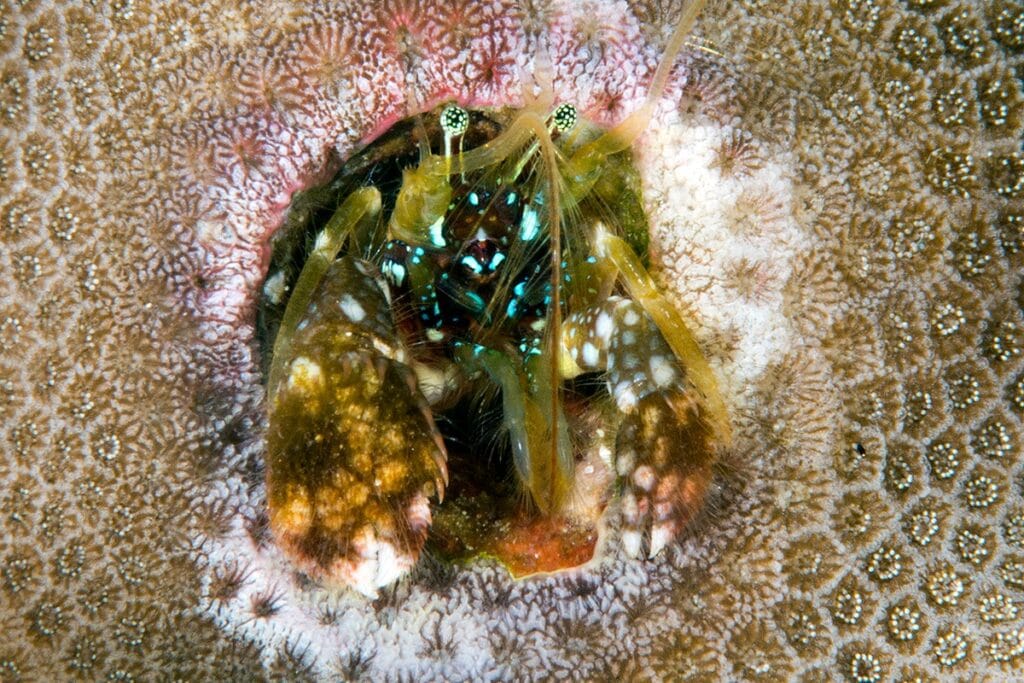
Paguritta Hermit Crabs often occur in small colonies. If you approach slowly and minimize water movement, something remarkable happens.
First, one crab cautiously emerges.
Then another.
Soon, several individuals begin waving their feathery mouthparts and antennae, interacting with water flow and reacting to nearby neighbors. The synchronized movements resemble a quiet conversation within the coral.
For macro photographers, this is where the real magic begins:
- intricate eye patterns
- fine claw textures
- subtle metallic reflections on the carapace
- delicate feeding appendages in motion
All of it unfolds within a space no larger than a coin.
How to Find the Paguritta Hermit Crab While Diving
Finding Paguritta requires a different search strategy. You’re not looking for movement across the reef — you’re looking inside the coral.
1. Examine Hard Corals Closely
Paguritta live inside worm tubes embedded in hard corals. Scan coral surfaces for:
- tiny round openings
- faint antenna movement
- small paired “dots” (eyes) inside a hole
If you think you see something — stop and wait.
2. Slow Down
They are highly sensitive to water movement.
Good buoyancy and stillness are essential.
If disturbed, they vanish instantly.
If you hold position for 20–30 seconds, they often reappear.
3. Look for More Than One
They frequently live in small colonies.
Once you find one, check nearby openings — several individuals may extend their feathery mouthparts at the same time, creating much more dynamic macro behavior.
Paguritta reward divers who reduce speed and change scale — from “reef landscape” to “micro-habitat.”
After you learn to see them, coral surfaces never look empty again.
Why Reef Crustaceans Deserve More Attention
The diversity of reef crustaceans is vast and significantly underrepresented in mainstream dive narratives. While large fish and colorful nudibranchs dominate attention, small decapods, shrimps, and specialized hermit crabs form a critical part of reef ecosystems.
For divers who already have hundreds — or thousands — of dives behind them, expanding focus to reef crustaceans opens an entirely new layer of discovery.
And unlike larger marine animals, the probability of encountering a species new to you is surprisingly high.
Field Guide for Reef Crustaceans
If this hidden world of coral-associated hermit crabs has sparked your curiosity, you may want to explore a dedicated identification resource.
Our Reef Crustaceans field guide provides:

- high-quality underwater photographs
- up-to-date taxonomy
- species distribution
- diagnostic identification features
Designed specifically for divers, underwater photographers, and marine life enthusiasts.
👉 Explore the Reef Crustaceans guide here:
For taxonomic reference, see the World Register of Marine Species (WoRMS).